PCB Safety:
We should use a combination of these factors to ensure the safety of the expensive components used in the project.
Mechanical Safety:
-
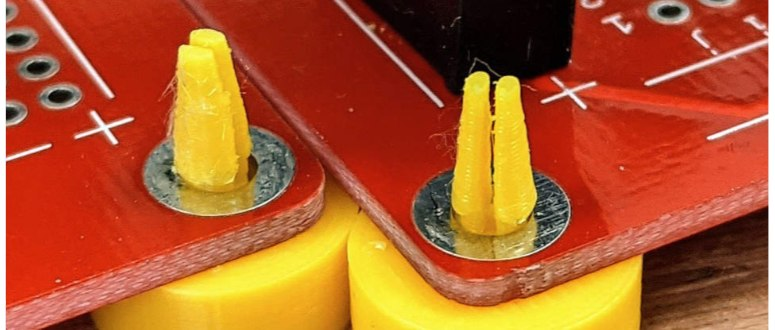
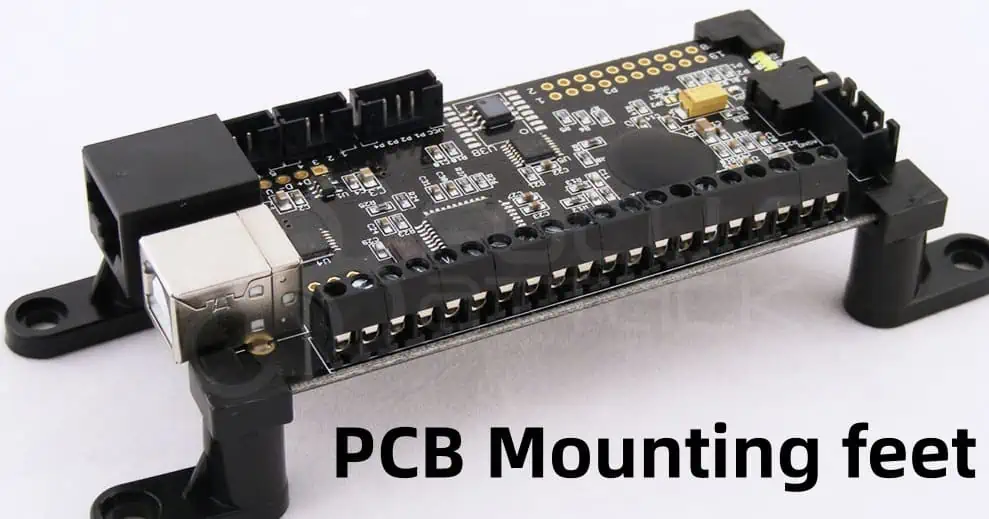
Viscoelastic rubber bumpers (best for drop isolation): small, elastomeric pads placed specifically at the four corners of the chassis and placed directly around the screw bosses of the motherboard. They isolate the sensitive PCB components by absorbing high-frequency shock waves and convert them to heat
-
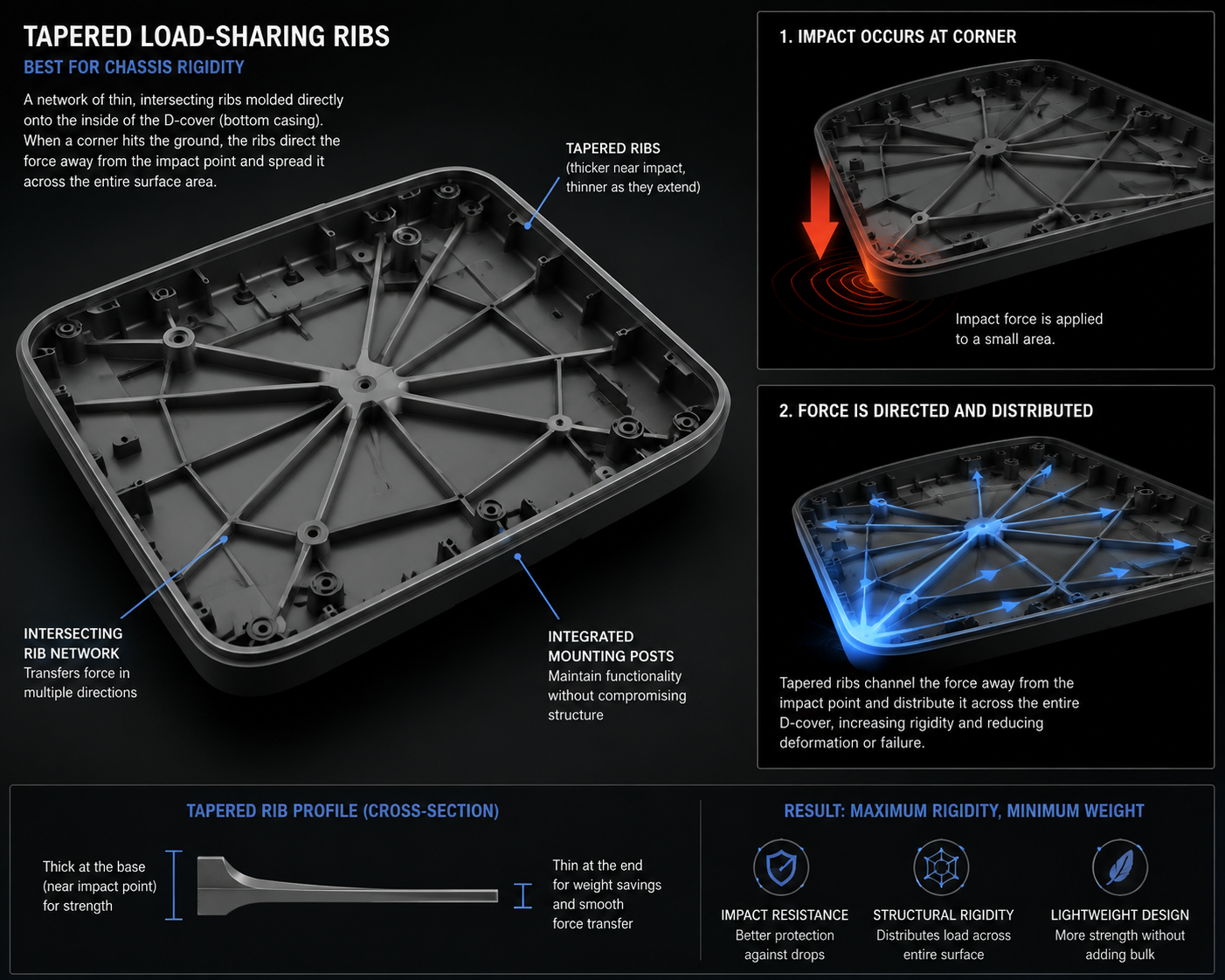
Tapered Load-Sharing Ribs (best for chassis rigidity): A network of thin, intersecting plastic or magnesium walls molded directly onto the inside of the D-cover (bottom casing). When a corner hits the ground, the ribs direct the force away from the impact point and spread it across the entire surface area of the bottom plate
Ribs are considered a best practice in design because they provide structural stiffness, strength, and load-bearing capacity to thin-walled parts without requiring the entire wall to be thickened. This technique optimises material usage, reduces part weight, and prevents manufacturing defects like warping and sink marks.
How to create: